

Hey there! As a supplier of SLA printing, I often get asked if SLA printing can be used for robotics components. Well, let's dive right into this topic and find out.
First off, what's SLA printing anyway? Stereolithography (SLA) is a 3D printing technology that uses a laser to cure liquid resin into hardened plastic. It's known for its ability to create highly detailed and accurate parts with a smooth surface finish. This makes it a popular choice for a wide range of applications, from creating prototypes to manufacturing end - use parts.
The Advantages of SLA Printing for Robotics components
High Precision & Tight‑Tolerance Performance
Robotic assemblies demand precise fit for moving components, and SLA Printing excels at meeting strict tolerance requirements. Complex geometries including gears, articulated joints and miniature mounting brackets can be manufactured with fine feature resolution. For custom robotic arm assemblies, SLA‑produced joint components guarantee accurate mating, smooth kinematic movement and reliable performance for prototype validation.
Diverse Functional Resin Grades
A broad portfolio of SLA resins supports different mechanical requirements for robotics. High‑strength tough resins withstand limited cyclic mechanical stress from robotic motion. Please note that even high‑strength SLA resins have fatigue limits; they work well for testing and intermittent operation, yet are not ideal for continuous long‑time repetitive workloads.
Unrestricted Design Freedom
Unlike CNC machining or injection molding, SLA imposes minimal manufacturing constraints on component geometry. Complex robotic structures that would otherwise be difficult or costly to produce via conventional methods can be realized directly. Engineers can optimize component performance with lightweight internal honeycomb structures, cut‑outs and organic shapes to reduce weight while preserving structural rigidity
Material Options in SLA Printing for Robotics
Now, let's talk about the specific material options available for SLA printing in the context of robotics.
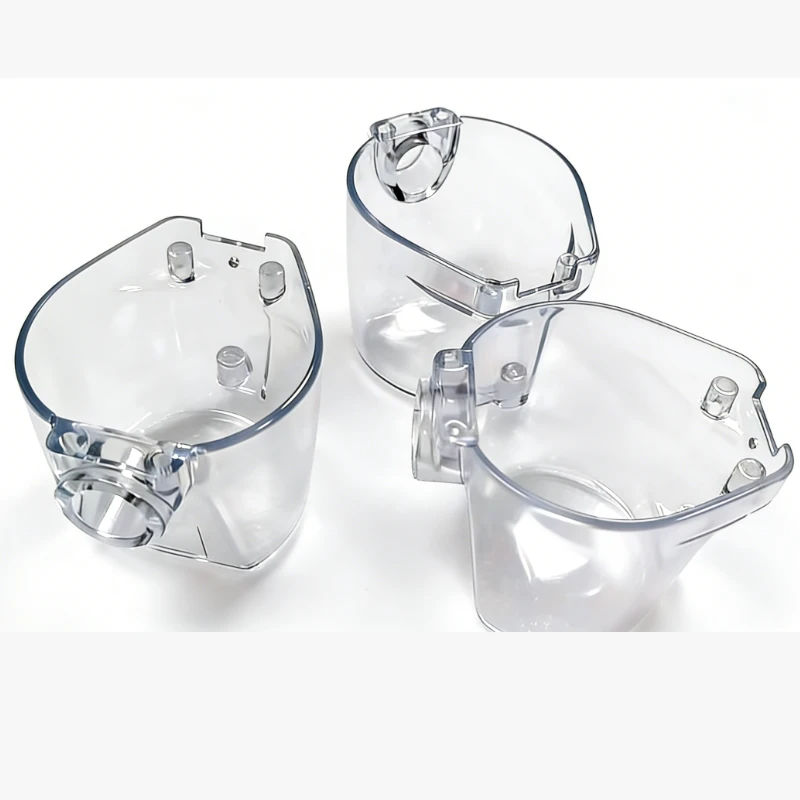
We have the SLA Transparent Resin, which can be really useful. In some robotic applications, you might need parts that are transparent. For example, if you're building a robot with a vision system, a transparent housing for the camera can protect the sensor while still allowing it to see clearly. The SLA transparent resin can be printed to create these parts with excellent optical clarity and good mechanical properties.
There are also high - temperature resistant resins. Some robots operate in environments where they are exposed to high temperatures, such as in industrial ovens or near engine compartments. SLA - printed parts made from high - temperature resins can maintain their shape and performance even in these harsh conditions.
Limitations and Considerations
However, SLA printing is less cost‑competitive for high‑volume mass production compared with CNC or injection molding. Per‑part costs should be assessed for large‑quantity orders.
The strength of SLA - printed parts might also be a factor. Even high‑performance SLA resins available, they may not be as strong as traditional materials like metal in some cases. For robots that need to handle heavy loads or operate in high - impact environments, you might need to reinforce the SLA - printed parts or consider using a combination of SLA - printed components and metal parts.
Another consideration is the post - processing. SLA - printed parts usually require some form of post - processing, such as cleaning and curing. This adds an extra step to the production process and can increase the overall time and cost.
Real - World Applications
In the real world, SLA printing is already being used for robotics parts in many ways. For example, in the field of educational robotics, SLA - printed parts are great for quickly creating custom components for student projects. Students can design their own robotic models and have the parts printed in a relatively short time, allowing them to test and iterate on their designs easily.
In the medical robotics field, SLA produces high‑fidelity prototypes and fixture components for surgical robot development. Outstanding precision enables precise assembly validation for minimally‑invasive robotic instruments.
Quality and Consistency
As a SLA printing supplier, we understand the importance of quality and consistency when it comes to producing robotics parts. We use state - of - the - art SLA printers and high - quality resins to ensure that each part meets the required specifications. Our quality control process includes checking the dimensions, surface finish, and mechanical properties of the printed parts. We also have a team of experienced technicians who can troubleshoot any issues that may arise during the printing process.
Cost - Effectiveness in the Long Run
Although SLA may carry higher upfront costs, it delivers economic value for development‑stage and custom‑low‑batch robotic projects. For one, the ability to quickly prototype and test different designs means that you can avoid costly mistakes in the development phase. You can make changes to the design based on the test results and print new parts at a relatively low cost compared to re - tooling for traditional manufacturing methods.
Also, if you need to produce small batches of customized robotic parts, SLA printing is a great option. You don't have to worry about the high setup costs associated with injection molding or large - scale machining.
Note: SLA is best suited for prototypes, enclosures and low‑load functional components. For heavy‑duty dynamically‑loaded robotic parts, SLS thermoplastic or metal manufacturing is recommended.

Conclusion
So, can SLA printing be used for robotics parts? Absolutely! It offers high precision, great design flexibility, and a variety of material options. While there are some limitations like cost and strength, with careful consideration and proper design, SLA - printed parts can be a valuable addition to your robotic projects.
If you're interested in using SLA - printed parts for your robotics needs, don't hesitate to reach out. We're here to help you find the best solutions for your specific requirements. Check out our SLA 3D Printed Parts page to see some examples of what we can do. Let's start a conversation and see how we can work together to bring your robotic ideas to life!
References
- Gibson, I., Rosen, D. W., & Stucker, B. (2015). Additive Manufacturing Technologies: 3D Printing, Rapid Prototyping, and Direct Digital Manufacturing. Springer.
- Wohlers, T., & Gornet, P. (2018). Wohlers Report 2018: 3D Printing and Additive Manufacturing State of the Industry. Wohlers Associates.