

In the realm of sheet metal fabrication, bending is a fundamental process that shapes raw materials into various forms, catering to a wide array of industrial and commercial needs. As a leading bending forming supplier, we understand the nuances of different bending techniques and their impact on precision. In this blog post, we will delve into the differences between press brake bending and roll bending in terms of precision, exploring their respective processes, advantages, and limitations.
Press Brake Bending: Precision in Controlled Force
Press brake bending is a widely used method in sheet metal fabrication, known for its ability to create precise bends with high accuracy. The process involves using a press brake machine, which consists of a punch and a die. The sheet metal is placed between the punch and the die, and the press brake applies force to bend the metal to the desired angle.
One of the key advantages of press brake bending is its high level of control over the bending process. The operator can adjust the force, speed, and position of the punch and die to achieve the exact bend angle and radius required. This level of control allows for the production of complex shapes and precise bends with tight tolerances.
Another advantage of press brake bending is its ability to produce consistent results. Once the machine is set up correctly, it can repeat the bending process with high accuracy, ensuring that each part is identical to the next. This makes press brake bending ideal for mass production applications, where precision and consistency are crucial.
However, press brake bending also has some limitations. One of the main limitations is the size of the parts that can be bent. Press brake machines have a limited capacity, and larger parts may require multiple bends or a different bending technique. Additionally, press brake bending can be time-consuming, especially for complex shapes or parts with multiple bends.
Roll Bending: Precision in Continuous Curvature
Roll bending is another popular method in sheet metal fabrication, used to create curved shapes and cylinders. The process involves passing the sheet metal through a set of rolls, which apply pressure to bend the metal into the desired shape.
One of the key advantages of roll bending is its ability to create continuous curves and cylinders with high precision. The rolls can be adjusted to control the radius and curvature of the bend, allowing for the production of complex shapes with smooth, consistent curves. This makes roll bending ideal for applications such as pipes, tubes, and cylindrical components.
Another advantage of roll bending is its ability to handle large parts. Roll bending machines can accommodate sheets of metal up to several meters in length and width, making them suitable for the production of large-scale components. Additionally, roll bending can be a faster process than press brake bending, especially for parts with simple curves or large radii.
However, roll bending also has some limitations. One of the main limitations is the difficulty in achieving precise bend angles. Unlike press brake bending, which can create sharp, defined bends, roll bending produces a more gradual curve. This can make it challenging to achieve precise bend angles, especially for parts with tight tolerances. Additionally, roll bending can cause some distortion or stretching of the metal, which may require additional processing to correct.

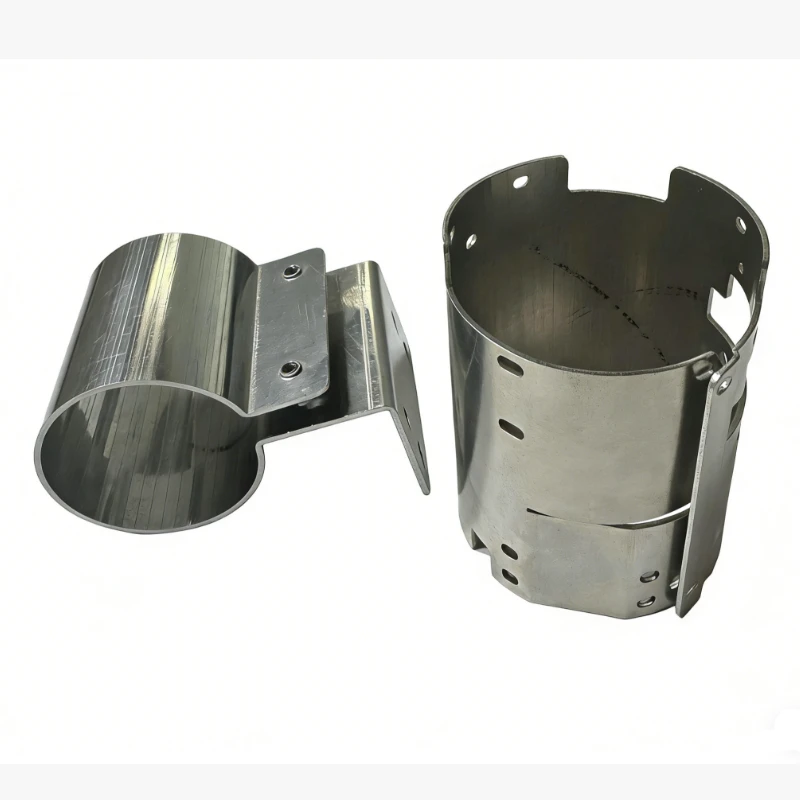
Precision Comparison: Press Brake Bending vs. Roll Bending
When it comes to precision, both press brake bending and roll bending have their strengths and weaknesses. Press brake bending is generally considered to be more precise for creating sharp, defined bends with exact angles and radii. The high level of control over the bending process allows for the production of parts with tight tolerances, making it ideal for applications where precision is crucial.
On the other hand, roll bending is more precise for creating continuous curves and cylinders with smooth, consistent curvatures. The ability to adjust the rolls to control the radius and curvature of the bend allows for the production of complex shapes with high precision. However, roll bending may not be as precise for achieving exact bend angles, especially for parts with tight tolerances.
In general, the choice between press brake bending and roll bending depends on the specific requirements of the application. If precision is the primary concern and the parts require sharp, defined bends with exact angles and radii, press brake bending may be the better choice. If the parts require continuous curves and cylinders with smooth, consistent curvatures, roll bending may be the better option.
Applications of Press Brake Bending and Roll Bending
Both press brake bending and roll bending are widely used in a variety of industries, including automotive, aerospace, construction, and manufacturing. Here are some examples of how these bending techniques are used in different applications:
Press Brake Bending Applications
- Automotive Industry: Press brake bending is used to manufacture a variety of automotive components, such as frames, brackets, and panels. The high level of precision and control over the bending process allows for the production of parts that meet the strict quality standards of the automotive industry.
- Aerospace Industry: Press brake bending is also used in the aerospace industry to manufacture components such as wings, fuselages, and engine parts. The ability to create complex shapes and precise bends with tight tolerances makes press brake bending ideal for the production of high-performance aerospace components.
- Construction Industry: Press brake bending is used in the construction industry to manufacture a variety of structural components, such as beams, columns, and trusses. The high strength and durability of the bent metal components make them suitable for use in buildings, bridges, and other infrastructure projects.
- Manufacturing Industry: Press brake bending is used in the manufacturing industry to manufacture a wide range of products, such as furniture, appliances, and electronics. The ability to create custom shapes and precise bends allows manufacturers to produce unique and innovative products that meet the needs of their customers.
Roll Bending Applications
- Pipe and Tube Manufacturing: Roll bending is commonly used in the pipe and tube manufacturing industry to create curved pipes and tubes. The ability to create continuous curves and cylinders with smooth, consistent curvatures makes roll bending ideal for the production of pipes and tubes used in plumbing, HVAC, and other applications.
- Cylindrical Component Manufacturing: Roll bending is also used to manufacture a variety of cylindrical components, such as tanks, pressure vessels, and drums. The ability to handle large parts and create complex shapes with high precision makes roll bending ideal for the production of these types of components.
- Architectural Applications: Roll bending is used in architectural applications to create curved metal structures, such as arches, domes, and columns. The ability to create smooth, consistent curves allows architects to design unique and visually stunning buildings and structures.
- Art and Design: Roll bending is also used in art and design applications to create curved metal sculptures and other decorative elements. The ability to create complex shapes and smooth curves allows artists and designers to express their creativity and create unique works of art.
Conclusion
In conclusion, press brake bending and roll bending are two important bending techniques in sheet metal fabrication, each with its own strengths and weaknesses in terms of precision. Press brake bending is generally more precise for creating sharp, defined bends with exact angles and radii, while roll bending is more precise for creating continuous curves and cylinders with smooth, consistent curvatures.
The choice between press brake bending and roll bending depends on the specific requirements of the application. If precision is the primary concern and the parts require sharp, defined bends with exact angles and radii, press brake bending may be the better choice. If the parts require continuous curves and cylinders with smooth, consistent curvatures, roll bending may be the better option.
As a leading bending forming supplier, we have the expertise and experience to provide high-quality press brake bending and roll bending services to meet your specific needs. Whether you need a small batch of custom parts or a large-scale production run, we can help you achieve the precision and quality you require. For more information about our Sheet Metal Clips Fasteners, Bended Stainless Steel Parts, CNC Step Bending, Aluminium Sheet Metal Bending, and Galvanized Steel Metal Folding, please contact us to discuss your project requirements and explore how we can assist you.
References
- ASM Handbook, Volume 14B: Metalworking: Sheet Forming, ASM International, 2013.
- Manufacturing Processes for Engineering Materials, 5th Edition, Serope Kalpakjian and Steven Schmid, Pearson, 2013.
- Sheet Metal Forming Handbook, James Carsley, ASM International, 2008.