

Customization options for silicone rubber prototypes are diverse and can be tailored to meet a wide range of specific requirements across various industries. As a Silicone Rubber Prototype supplier, I am well - versed in the numerous ways we can customize these prototypes to serve our clients' exact needs.
1. Material Hardness
Silicone rubber can be customized in terms of hardness, which is measured on the Shore scale. The Shore scale consists of different series, with the Shore A scale being commonly used for softer rubbers and the Shore D scale for harder ones. For applications that require a soft and flexible material, such as Soft Rubber Washers, we can produce silicone rubber prototypes with a low Shore A hardness, typically ranging from 10 to 30. These soft prototypes are ideal for gaskets in delicate electronic devices or for medical applications where a gentle touch is necessary.
On the other hand, if a more rigid and durable material is needed, we can increase the hardness. For example, prototypes with a Shore A hardness of 60 - 90 or even in the Shore D range can be used for structural components or parts that need to withstand high pressure. By adjusting the material hardness, we ensure that the silicone rubber prototype performs optimally in its intended application.
2. Color Customization
Color is an important aspect of customization for silicone rubber prototypes. We offer a wide range of color options to match our clients' brand requirements or design preferences. The colorant can be added during the mixing process of the silicone rubber components. We can achieve almost any Pantone color, from vibrant primary colors to subtle pastels or special effects like metallic or fluorescent colors.
For consumer products, color customization is crucial as it enhances the product's visual appeal. For instance, a toy manufacturer might require bright and attractive colors for their silicone - based toys to attract children. In the automotive industry, color - matched silicone rubber prototypes are used for interior components to maintain a consistent aesthetic with the overall vehicle design.
3. Shape and Geometry
The shape and geometry of silicone rubber prototypes can be highly customized. Using techniques like Polyurethane Vacuum Casting and Vacuum Casting Silicone Mold, we can create prototypes with complex shapes, including undercuts, thin - walled sections, and intricate details.
For example, in the aerospace industry, silicone rubber prototypes are used for seals and gaskets with very precise shapes to ensure airtight and watertight connections in aircraft components. In the consumer electronics sector, the prototypes can be designed to fit snugly into the device's housing, with custom - shaped buttons or connectors. Our advanced manufacturing processes and skilled technicians allow us to translate our clients' 3D designs into accurate physical prototypes.
4. Surface Finish
The surface finish of silicone rubber prototypes can also be customized. We offer different levels of smoothness, from a high - gloss finish to a matte or textured finish. A high - gloss finish gives the prototype a sleek and professional look, which is often preferred for consumer products like mobile phone cases or cosmetic packaging.

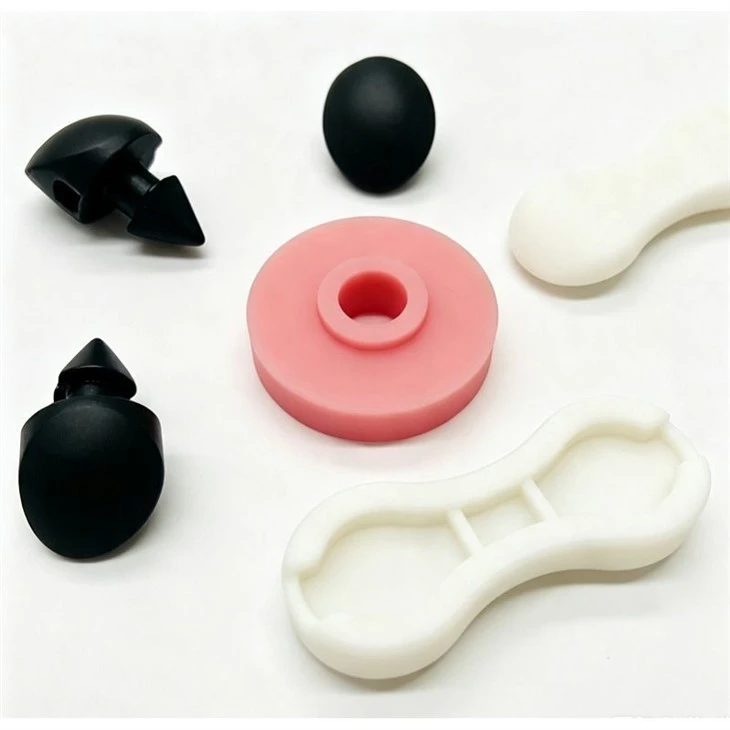
A matte finish, on the other hand, can reduce glare and provide a more subdued appearance. It is suitable for applications where a non - reflective surface is required, such as in medical equipment or automotive interior parts. Textured finishes can be used to enhance grip or to create a specific tactile feel, which is important for products like handgrips or knobs.
5. Physical and Chemical Properties
Beyond the basic customization options, we can also tailor the physical and chemical properties of silicone rubber prototypes. For example, we can improve the prototype's resistance to heat, cold, chemicals, or UV radiation. In high - temperature applications, such as in industrial ovens or automotive engines, we can produce silicone rubber prototypes with enhanced heat resistance.
These prototypes can maintain their mechanical properties and integrity at elevated temperatures for extended periods. For outdoor applications, where the prototype will be exposed to sunlight and various weather conditions, we can enhance its UV resistance to prevent degradation and discoloration. Chemical - resistant silicone rubber prototypes are used in industries such as chemical processing and pharmaceuticals, where they come into contact with various corrosive substances.
6. Additives and Fillers
We can incorporate additives and fillers into the silicone rubber to further customize its properties. For example, adding carbon black can improve the prototype's electrical conductivity, making it suitable for applications in the electronics industry, such as EMI shielding gaskets. Flame - retardant additives can be used to enhance the fire - resistance of the prototype, which is crucial for safety - critical applications in buildings, transportation, and electrical equipment.
Glass fibers or other reinforcing fillers can be added to increase the strength and stiffness of the silicone rubber. This is beneficial for structural components that need to support heavy loads or withstand mechanical stress. By carefully selecting and combining additives and fillers, we can create silicone rubber prototypes with unique and tailored properties.
7. Tolerance and Precision
As a Silicone Rubber Prototype supplier, we understand the importance of tolerance and precision in many applications. We can achieve high levels of dimensional accuracy in our prototypes, with tolerances as tight as ±0.05mm in some cases. This level of precision is essential for components that need to fit precisely with other parts, such as in medical devices or high - end machinery.
Our quality control processes ensure that each prototype meets the specified tolerances. We use advanced measurement tools and inspection techniques, including coordinate measuring machines (CMM), to verify the dimensions and geometry of the prototypes. This allows us to deliver products that are not only customized in terms of their properties but also in their fit and function.
Conclusion
In conclusion, the customization options for silicone rubber prototypes are extensive and can be precisely tailored to meet the specific needs of our clients. Whether it's adjusting the material hardness, color, shape, surface finish, physical and chemical properties, or incorporating additives and fillers, we have the expertise and resources to create high - quality prototypes.
If you are in need of customized Silicone Rubber Prototype, we invite you to contact us to discuss your requirements. Our team of experts will work closely with you to understand your needs and provide the best - suited solutions. We look forward to the opportunity to collaborate with you and bring your innovative ideas to life.
References
- "Silicone Rubber Handbook" by A. L. Ruschak
- "Polymer Materials Science and Engineering" by James E. Mark
- Industry reports on silicone rubber manufacturing and applications