
As an SLS 3D printing supplier, I get asked this question almost daily: “Why is SLS printing more expensive than FDM or resin-based methods like stereolithography (SLA)?” It’s a fair question—especially when 3D printing is marketed as a low-cost alternative to traditional manufacturing. But the truth is, SLS’s higher price tag isn’t about padding profits; it’s rooted in the specialized technology, material complexity, and operational rigor that make it the go-to for high-strength, complex parts that other methods can’t touch. Let’s break down the key factors that drive SLS costs, and why investing in it often saves you more in the long run.
First, let’s start with the machine itself. SLS printers aren’t like the desktop FDM units many hobbyists use. The systems I work with are industrial-grade, built to handle high temperatures and large build volumes. An industrial SLS machine can cost anywhere from $500,000 to over $1 million—far more than a mid-range FDM printer, which might run $5,000 to $50,000. That’s a massive capital expense, and we have to account for that in our pricing. But it’s not just the upfront cost. SLS requires a controlled environment: the build chamber is heated to just below the melting point of the powder material, so the part cools gradually without warping. If the temperature drops even a little, you get inconsistent parts or failed builds. Maintaining that consistent heat, along with the inert gas (usually nitrogen) needed to prevent powder oxidation, adds to ongoing operational costs.
Next, there’s the material. SLS uses a powdered thermoplastic, most commonly polyamide (PA12), but also glass-filled nylon, TPU, and other specialized materials. Unlike FDM, which uses filament that’s relatively cheap to produce, SLS powder is precision-made to have uniform particle size and flowability. If the particles are too big, they can’t fuse properly; too small, and they clump. That quality control adds cost. For example, check out our PA12 Printing page to see the standard material we use—it’s formulated to have high impact resistance and fine detail, which makes it ideal for functional prototypes and end-use parts. Glass-filled nylon is another popular option, and our SLS Glass Filled Nylon page explains how that material delivers even higher stiffness and heat resistance for demanding applications. These materials aren’t cheap: a kilogram of PA12 powder costs around $30 to $50, while glass-filled nylon is even more expensive, at $40 to $60 per kilogram. Compare that to FDM filament, which is often $20 to $40 per kilogram, and you can see the difference.
But here’s where SLS gets tricky: not all the powder is used. During the build, any powder not fused to the part is leftover. The good news is that this leftover powder can be reused—up to 70% in many cases, as long as it’s sieved and mixed with fresh powder. But the sieving process is labor-intensive, and you can’t reuse the powder indefinitely. Over time, the material degrades from heat exposure and repeated melting, so we have to discard a portion of it with each build. That means every build requires a mix of fresh and recycled powder, which adds to material costs. For a typical build volume of 300x300x400mm, we might use 10 to 15 kilograms of powder total, with 30% being new. That’s a significant material investment that doesn’t go directly into your final part.
Then there’s the part complexity benefit (and the associated labor). SLS excels at producing parts with intricate internal geometries, overhangs, and lattice structures—all without support material. In FDM, you need supports for any overhangs, which have to be removed, adding post-processing time and sometimes leaving marks on the part. In SLA, liquid resin can have issues with overhangs too, and supports are even more tedious to remove. With SLS, the unsintered powder acts as a natural support, so you can print parts that would be impossible (or extremely costly) with other methods. That sounds like a win, but the trade-off is that post-processing SLS parts requires more steps: you have to remove the loose powder from the part’s internal channels, often using compressed air, vibratory tumblers, or even media blasting. For parts with complex geometries, this process can take hours, and it’s done by skilled technicians who know how to avoid damaging the part. That labor adds to the cost, but it’s necessary to get a clean, functional part.
Another factor: quality control and testing. When you’re producing functional parts, consistency is key. We run tests on every batch of powder and every build to make sure parts meet strength, dimensional accuracy, and surface finish standards. For example, we test tensile strength of PA12 parts to ensure they meet ASTM standards, and we check for any porosity that could compromise part integrity. This testing isn’t free, but it’s what separates industrial SLS from hobbyist-level machines. If you’re printing a prototype for a medical device or a aerospace component, you can’t afford a failed part because of inconsistent material or machine settings. That quality control adds cost, but it’s a critical investment for our customers.
Wait, let’s also compare to other methods that people might think are cheaper. Multijet Fusion (MJF) is often cited as a competitor to SLS, and if you check our Multijet Fusion Printing page, you’ll see that it has some similarities—both use powdered thermoplastics and fuse them with a thermal agent. But why is SLS more expensive than MJF sometimes? It comes down to machine technology and material. MJF uses a different fusing process, and some MJF machines are more efficient at utilizing powder, with higher build rates. Also, the materials for MJF are often optimized for that specific process, so they might be cheaper or more readily available. FDM, on the other hand, uses filament that’s mass-produced, so it’s cheaper, but it’s not suitable for parts that need high strength or fine detail. Resin printing (SLA/DLP) has high resolution, but parts are brittle, and the resin is expensive, with post-processing steps like curing and washing. So while SLS is pricier than some methods, it’s delivering a different value proposition.
Let’s put this in perspective with a real example. Suppose you need 100 functional brackets for a product. With FDM, each bracket might cost $5, using filament that’s relatively cheap, but the parts have lower strength and may warp. With SLA, each bracket might cost $8, but they’re brittle and not suitable for load-bearing. With SLS, each bracket might cost $12, but they’re strong, durable, and can have complex internal lattices to save weight. If you’re testing prototypes or producing end-use parts that need to withstand stress, the higher cost of SLS is justified by the part’s performance. You’re not just paying for the printing—you’re paying for a part that meets your functional requirements, reduces the need for secondary manufacturing, and has a longer lifespan.
As a supplier, we also have to account for the time it takes to set up each build. SLS builds are fast in terms of volume—you can print dozens of small parts in a single build, which is more efficient than SLA or FDM for large batches. But the setup process is more involved: calibrating the machine, loading the powder, programming the laser settings, and monitoring the build to make sure the temperature and laser power are consistent. A single build can take 12 to 24 hours, and during that time, a technician has to be on hand to address any issues. That labor overhead is spread across all our customers, but it’s a necessary cost to ensure the machine runs smoothly.
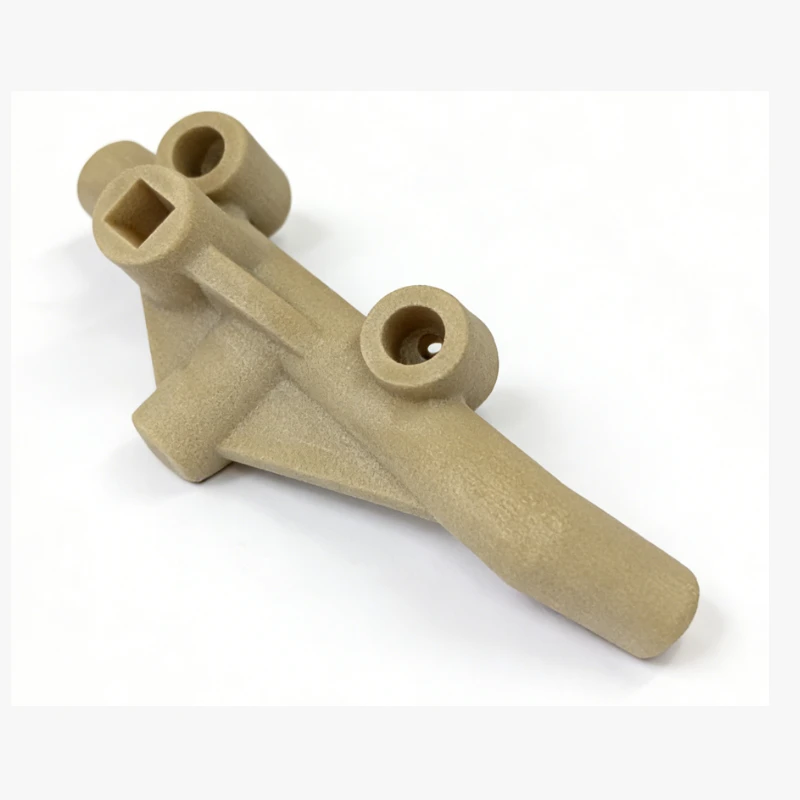

I also want to address a common misconception: that SLS is only for high-volume production. While it’s great for batches of 10 to 10,000 parts, it’s also a top choice for low-volume custom parts. For example, a startup might use SLS to print a small batch of custom phone cases that fit unique ergonomic requirements. Even for low volumes, the ability to print complex geometries without tools means you don’t have to invest in expensive molds, which saves money in the long run. That’s a value that’s hard to quantify, but it’s why many of our customers keep coming back to SLS.
So, when you’re comparing 3D printing methods, don’t just look at the upfront cost. Ask yourself: what do you need the part to do? If it’s a simple decorative object, FDM or resin might be enough. If it’s a functional prototype, a load-bearing component, or a part with intricate features, SLS is worth the investment. The higher price tag reflects the specialized technology, quality control, and material performance that make SLS one of the most reliable 3D printing methods available today.
If you’re ready to explore SLS printing for your project, or if you have questions about how our process works, we’re here to help. Our team has years of experience working with PA12, glass-filled nylon, and other SLS materials, and we can help you choose the right material and process for your needs. Whether you’re looking for prototypes, low-volume production, or custom parts, we can provide the high-quality, consistent parts you need. Reach out to us today to discuss your project and get a personalized quote.
References:
- ASTM International. (2022). Standard Test Method for Tensile Properties of Plastics. ASTM D638-22.
- Gibson, I., Rosen, D. W., & Stucker, B. (2021). Additive Manufacturing Technologies: 3D Printing, Rapid Prototyping, and Direct Digital Manufacturing (3rd ed.). Springer.
- Wohlers, T. T. (2023). Wohlers Report 2023: Additive Manufacturing and 3D Printing State of the Industry. Wohlers Associates.
- International Organization for Standardization. (2020). Additive Manufacturing — General Principles — Part 1: Terminology. ISO/ASTM 52900:2020.