

Hey there, thanks for swinging by my corner of the web – if you’ve ever stared at a wobbly, leaky seal and thought “why won’t this last?”, you’re in the right spot. I’ve been a soft rubber washers supplier for over a decade now, and the question I get asked most often (after “can you make these in neon pink?”) is about their temperature range. Folks always want a hard number, like “it works between X and Y degrees, right?” But here’s the thing: soft rubber washers aren’t one-size-fits-all, and their temp sweet spot depends on way more than just the material they’re made from. Let’s break this down, no jargon, promise.
First off, let’s get one thing straight – “soft rubber” is a broad term. When I say soft, I mean Shore A hardness (that’s the rubber’s “squish factor”) sitting between 20 and 70, give or take. Think bouncy, squishy stuff, not hard, grippy rubber tires. Most of the soft rubber washers I send out are either silicone or EPDM – those are the workhorses for everything from plumbing to automotive to electronics. I see a lot of new buyers mix these two up, so let’s start with the basics.
Silicone soft rubber washers are the heat champs, in my book. I’ve had customers run them in industrial ovens (wait, not the ones for baking, the ones that cure plastic parts) up to 450°F, and pull them out still sealing tight. On the flip side, they don’t love being frozen solid – so far, the lowest I’ve seen them hold up is around -100°F. That’s why they’re super popular for things like refrigerator door seals (the soft, squishy ones that keep cold air in) or aerospace parts that have to handle both high-altitude cold and engine heat. But here’s a caveat: silicone gets a little mushy if you stay too long near that 450°F mark. I once had a guy call me panicking because his washers “melted” – turned out he left them in a furnace at 500°F for 3 hours by accident. Oops. They still worked, but they lost a tiny bit of their squish and wouldn’t bounce back as well. If you need silicone washers for high-heat stuff, just stick to the 400°F max for continuous use – anything over that is pushing it.
Now EPDM soft rubber washers – these are the tough guys for outdoor use. They don’t fade in the sun, they don’t get eaten by rain or snow, and their temp range is a little different. EPDM hates extreme heat more than silicone – max continuous temp is around 250°F, and lowest is about -40°F. I sent a batch to a construction company last year that was fixing a roof in Alaska, and they used EPDM washers to seal the metal fasteners. They called me a few months later to say they still weren’t leaking, even when temps dropped to -50°F that winter. That’s way below the rated range, but EPDM’s actually a little more resilient than specs say in real-world use. The downside? If you run EPDM near an engine exhaust line (which gets way hotter than 250°F), it’ll harden and crack. I’ve seen that happen – those washers turn into brittle little rocks after a few months, and then you’ve got leaks. So EPDM is for cold, outdoor, non-extreme-heat stuff, not for anything near a hot engine.
Wait, but what about other soft rubbers? I occasionally get asked about neoprene or natural rubber. Natural soft rubber is cheap, but it only works between -20°F and 180°F – super narrow range, and it breaks down if it touches oil or gasoline. I don’t even carry neoprene washers anymore because most customers end up switching to EPDM after a month when they start cracking from UV light. The only time I recommend non-silicone, non-EPDM is for super specific stuff, like sealing a food container that only stays around room temp. But 9 times out of 10, I point people to either silicone or EPDM – those are the ones with consistent temp ranges and reliable performance.
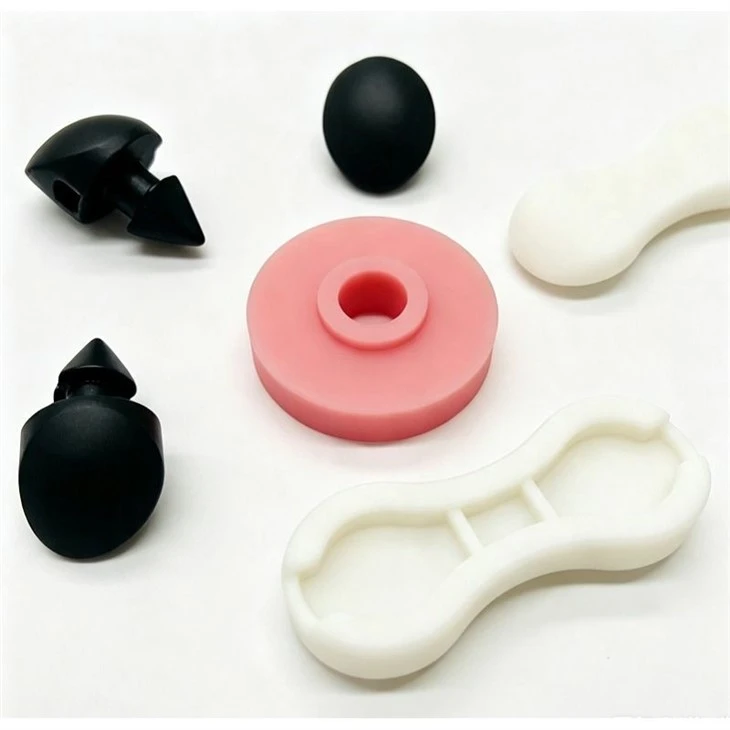
Now, here’s the part most people don’t know: the temperature range isn’t just about the rubber material. It’s also about how the washer’s made. I’ve got a friend who runs a molding shop, and he does vacuum casting silicone mold work for prototype parts, including silicone rubber prototype soft washers for startups testing new products. The way you cure the rubber (the heat and pressure during molding) changes its actual temp rating. If you cure silicone too hot for too short a time, it’ll be softer than it’s supposed to, and it won’t hold up at high temps. Same with EPDM – if you mix in too much filler to cut costs, it hardens faster in the cold or breaks down in the heat. That’s why I only use trusted suppliers for my materials, and when I get custom washers made, I always ask for material test data – no cutting corners here.
Another thing that affects temp range: what the washer’s sealing against. If it’s sealing two metal pipes in a heated building, that’s way different from sealing a pipe in a pipe outdoors. If the fluid passing through the pipe is hot, that changes the washer’s temp exposure more than just the ambient air. I had a customer a while back who was using silicone washers to seal hot water lines in a spa – the water was 120°F, ambient air around the spa was 100°F, and his washers lasted 2 years, no leaks. But if he used the same washer to seal a hot oil line at 350°F, they’d be shot in a month. It’s not just the air temp – it’s the medium too.
I also get questions about short-term vs. continuous use. The rated temp ranges I give are for steady, everyday use. If you’ve got a washer that only has to handle 400°F for an hour during a one-time machine setup, silicone will do fine. But if it’s sitting at 350°F 8 hours a day, 5 days a week, you’re pushing it – go down 50°F from the max to be safe. Same with cold: if a washer is only going to be exposed to -50°F for a night during a blizzard, EPDM will hold up, but if it’s at -40°F every day in a cold storage warehouse, that’s its sweet spot.
Let me throw out some real examples of what I’ve sent out, so you can see this in action. Last quarter, I sent a batch of soft rubber washers to a company making commercial coffee machines. They needed something that could handle hot water (up to 200°F) and hot steam (up to 300°F) for years. We went with silicone, and they’re still going strong. Another customer was making outdoor patio lights that had to stay on in 100°F summer heat and 0°F winter cold – EPDM washers, no issues. And I once had a guy who ordered washers for a food truck’s exhaust system – thought silicone would work, but the exhaust hit 500°F, so I talked him into a custom polyurethane vacuum casting washer (polyurethane’s a different material, works up to 300°F, tougher than EPDM) – he called me a week later, said the leaky exhaust was fixed.
Wait, I should also mention what happens when you push past the temp range. For silicone, too hot makes it sag, lose its squish, and stop sealing. Too cold makes it stiff, so when the parts expand and contract, it cracks. For EPDM, too hot makes it hard and brittle, too cold makes it crack when it’s under pressure. I’ve had to replace a lot of washers over the years because people didn’t check the temp range first. One time, a construction worker ordered EPDM washers for a hot water heater in a garage – the heater was 180°F, way over EPDM’s max. He didn’t catch the leak until it flooded the garage, and blamed me. Turns out he didn’t read the spec sheet I sent, which clearly said EPDM max is 250°F, but only for ambient – continuous fluid temp should be under 200°F. Live and learn, right?
Now, if you’re shopping for soft rubber washers, what should you do first? Don’t just ask “what’s the temp range” – tell me where it’s going to be used: is it for indoor plumbing, outdoor equipment, automotive parts, aerospace? What’s the ambient temp, and what’s it sealing against (water, oil, steam, air)? That way I can point you to the right material, not just a generic range. Because here’s the thing: there’s no single answer to the temp range question. It all depends on the rubber, how it’s made, where it’s used, and what it’s sealing.
If you’re curious about the washers I offer, head over to my Soft Rubber Washers page – I’ve got specs for silicone and EPDM, plus I do custom orders if you need something specific, like a certain size or hardness. I also work with startups that need prototype parts, so if you’re testing a new product and need help picking the right washer, just reach out. No question is too small – I’ve been doing this long enough to know that the smallest seal can make or break a whole product.
So, to wrap this up: soft rubber washers’ temperature range isn’t a hard number. Silicone is best for high heat (continuous 200-400°F) and super cold (-100°F to -60°F). EPDM is best for outdoor use (continuous -40°F to 225°F, max ambient 250°F). Other rubbers have way narrower ranges, so stick to those two unless you’ve got a really specific need. And always remember: the temp range is a guideline, not a rule – consider the medium, how long it’s exposed, and how the washer’s made.
If you’ve got a project coming up and aren’t sure which washer to get, hit me up for a chat. I don’t do fancy sales pitches, just honest advice from someone who’s seen good and bad seals over the years. Don’t guess – get the right washer the first time, save yourself the headache of leaks down the line.

REFERENCES
- Society of Plastics Engineers. (2021). Molding Technology for Elastomeric Components. SPE Publications.
- Rubber Manufacturers Association. (2022). Elastomer Temperature Performance Guidelines for Industrial Seals. RMA Technical Bulletin.
- ASTM International. (2020). Standard Test Methods for Rubber Property – Effect of Temperature. ASTM D139-20.
- NASA. (2019). Materials Selection Guide for Aerospace Sealing Components. NASA Technical Report.