
Hey there! If you're into product development, you've probably heard of rapid prototyping services. I'm part of a rapid prototyping services provider, and I'm stoked to chat with you about one of the crucial aspects: surface finish quality.
Let's kick things off by understanding what surface finish quality means in rapid prototyping. Simply put, it's how the outer layer of your prototype looks and feels. It can range from super smooth and shiny to a bit rough and textured, depending on your needs.
Now, different rapid prototyping techniques bring different levels of surface finish quality to the table. One of the popular methods we offer is Multijet Fusion Printing. This technology is pretty cool because it can produce parts with a high - resolution surface finish. The printed parts have a smooth texture, and the details are sharp. You won't see those obvious layer lines that you sometimes get with other methods. It's great for prototypes that need to look and feel like the final product, whether it's a consumer electronics case or a medical device component.
Another technique we're well - versed in is PA12 Printing. PA12, or polyamide 12, is a commonly used material in selective laser sintering (SLS). The surface finish of PA12 printed parts is generally good. It has a slightly grainy texture, which can be an advantage in some applications. For example, if you're making a grip for a tool, that little bit of texture can provide better traction. And with some post - processing, like sanding or vapor smoothing, you can further enhance the surface finish to make it even smoother.
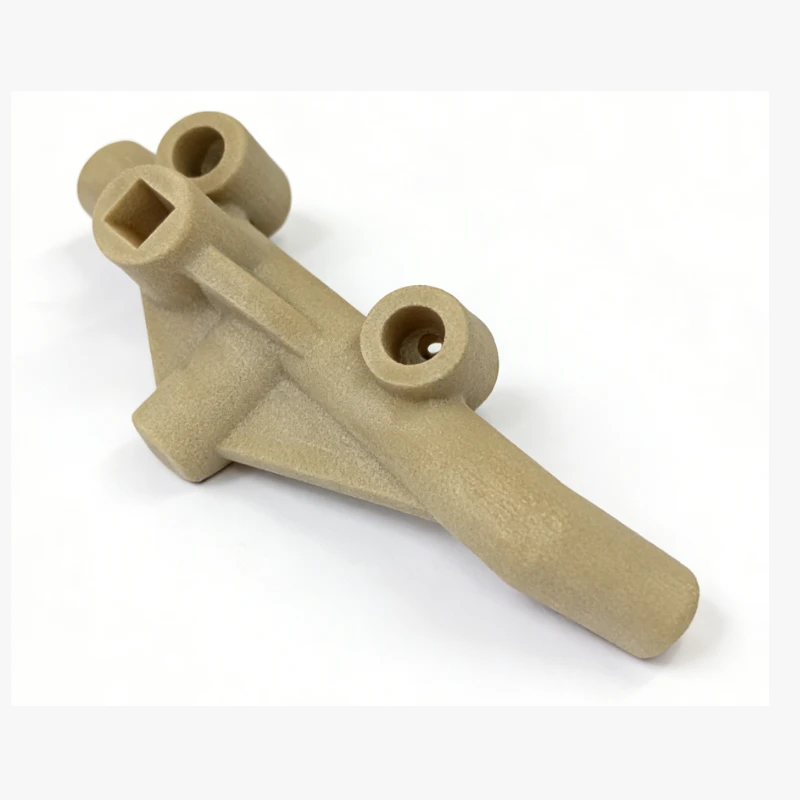

When it comes to metal parts, SLM Metal Printing is our go - to. Selective Laser Melting (SLM) uses a high - power laser to melt metal powder layer by layer. The surface finish of SLM - printed metal parts can vary. Right out of the printer, the surface might have a bit of a rough, as - built look due to the melting process and the powder adhesion. But with proper post - processing, such as machining, polishing, or bead blasting, you can achieve a high - quality surface finish. For aerospace or automotive applications where precision and a good surface finish are critical, these post - processing steps can make a huge difference.
Let's talk about PLA FDM. Fused Deposition Modeling (FDM) using PLA (Polylactic Acid) is one of the most accessible and widely used rapid prototyping techniques, especially for those just starting out. The surface finish of PLA FDM parts typically shows visible layer lines. This is because the printer deposits the material in layers, and the boundaries between the layers are evident. However, this isn't always a bad thing. For some concept models or products where the look isn't the top priority, the layer lines can add a nice, industrial - looking aesthetic. And if you want a smoother finish, you can sand the parts or use chemical vapor smoothing to reduce the visibility of the layer lines.
Then there's SLS Glass Filled Nylon. When glass fibers are added to nylon in the SLS process, it gives the parts enhanced mechanical properties. In terms of surface finish, glass - filled nylon printed parts have a characteristic texture. The glass fibers can give the surface a bit of a coarser feel compared to unfilled nylon. But this texture can also provide better resistance to wear and tear. And again, post - processing can be used to modify the surface finish to meet your specific requirements.
Now, several factors can affect the surface finish quality in rapid prototyping. First off, the layer height plays a big role. A smaller layer height generally results in a smoother surface finish because there are less visible layer lines. But printing with a smaller layer height also means it takes longer, so it's a trade - off between time and surface quality.
The material you choose is also crucial. Different materials have different inherent properties that affect the surface finish. For example, some plastics are more likely to have a shiny finish, while others are more matte. And the quality of the material can matter too. Higher - quality materials often result in better - looking and more consistent surface finishes.
The post - processing steps you take can transform the surface finish. Sanding is a simple yet effective way to smooth out rough surfaces and reduce the visibility of layer lines. Polishing can make the surface shiny and reflective. Chemical treatments, like vapor smoothing, can dissolve the outer layer of the part slightly, creating a smooth and uniform surface.
As a rapid prototyping services provider, we understand that every project is unique, and the surface finish requirements can vary widely. Whether you need a super smooth finish for a high - end consumer product or a textured surface for a functional part, we've got the expertise and the technology to meet your needs.
If you're in the market for rapid prototyping services and want to discuss the best surface finish options for your project, don't hesitate to reach out. We're here to help you turn your ideas into high - quality prototypes.
References:
- Industry knowledge and experience in rapid prototyping services.
- Technical documentation from rapid prototyping equipment manufacturers.